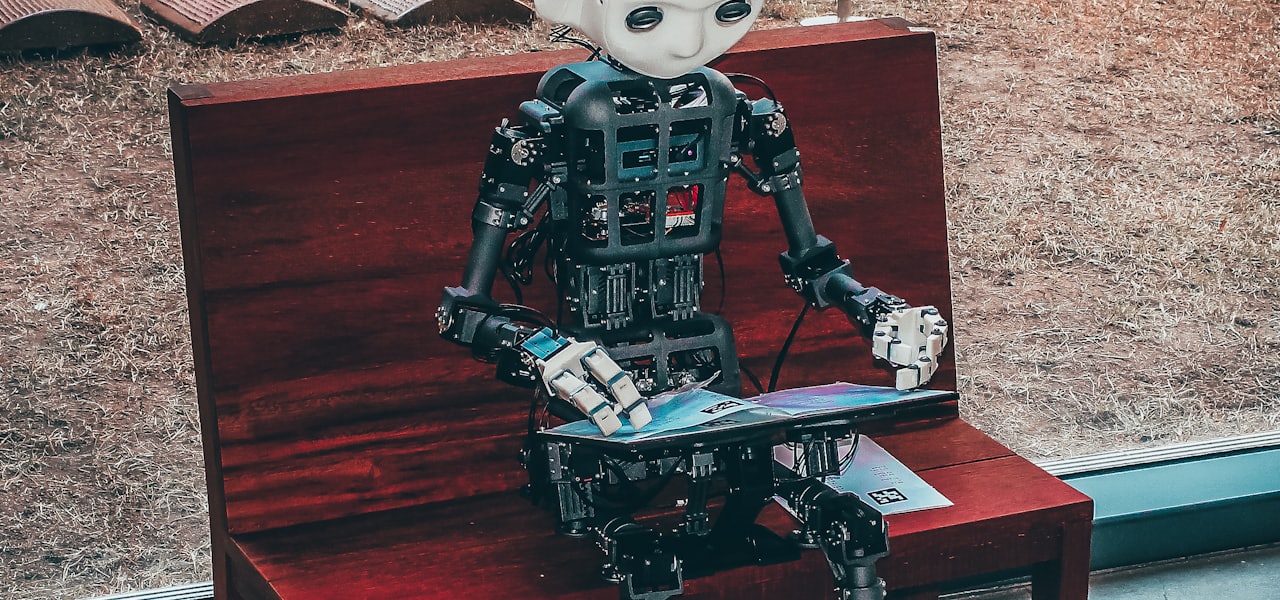
The term information professional or information specialist refers to professionals responsible for the collection, documentation, organization, storage, preservation, retrieval, and dissemination of printed and digital information. The service delivered to the client is known as an information service. The term "information professional" is a versatile one, used to describe similar and sometimes overlapping professions, such as librarians, archivists, information managers, information systems specialists, information scientists, records managers, and information consultants. However, terminology differs among sources and organisations. Information professionals are employed in a variety of private, public, and academic institutions, as well as independently. == Skills == Since the term information professional is broad, the skills required for this profession are also varied. A Gartner report in 2011 pointed out that "Professional roles focused on information management will be different to that of established IT roles. An 'information professional' will not be one type of role or skill set, but will in fact have a number of specializations". Thus, an information professional can possess a variety of different skills, depending on the sector in which the person is employed. Some essential cross-sector skills are: IT skills, such as word-processing and spreadsheets, digitisation skills, and conducting Internet searches, together with skills loan systems, databases, content management systems, and specially designed programmes and packages. Customer service. An information professional should have the ability to address the information needs of customers. Language proficiency. This is essential in order to manage the information at hand and deal with customer needs. Soft skills. These include skills such as negotiating, conflict resolution, and time management. Management training. An information professional should be familiar with notions such as strategic planning and project management. Moreover, an information professional should be skilled in planning and using relevant systems, in capturing and securing information, and in accessing it to deliver service whenever the information is required. == Associations == Most countries have a professional association who oversee the professional and academic standards of librarians and other information professionals. There are also international associations related to LIS (library and information science), the most prominent of which is the International Federation of Library Associations and Institutions (IFLA). In many countries, LIS courses are accredited by the relevant professional association, as the American Library Association (ALA) in the USA, the Chartered Institute of Library and Information Professionals (CILIP) in the UK, and the Australian Library and Information Association (ALIA) in Australia. == Qualifications == Educational institutions around the world offer academic degrees, or degrees on related subjects such as Archival Studies, Information Systems, Information Management, and Records Management. Some of the institutions offering information science education refer to themselves as an iSchool, such as the CiSAP (Consortium of iSchools Asia Pacific, founded 2006) in Asia and the iSchool Caucus in the USA. There are also online e-learning resources, some of which offer certification for information professionals. === Africa === Information development in Africa started later than in other continents, mainly due to a lack of internet access, expertise and resources to manage digital infrastructure, and "opportunities for capacity development and knowledge-sharing". Nowadays, academic degrees in information studies are available at many universities of African countries, such as the University of Pretoria (South Africa), University of Nairobi (Kenya), Makerere University (Uganda), University of Botswana (Botswana), and University of Nigeria (Nigeria). === Asia === LIS-related studies are available in more than 30 Asian countries. Some examples listed by iSchools Inc. are the University of Hong Kong, University of Tsukuba, Japan, Yonsei University, South Korea, National Taiwan University and Wuhan University, China. Centre of Library and Information Management Science (CLIMS) at Tata Institute of Social Science in Mumbai, India. In Southeast Asia, the Congress of Southeast Asian Librarians (CONSAL) connects librarians and libraries in more than 10 countries with resources, networking opportunities, and support for growing library systems. === Australasia === The Australian Library and Information Association (ALIA) as of 2021 lists six schools offering undergraduate and postgraduate accredited university courses for "Librarian and Information Specialists" on their website. In New Zealand, the Open Polytechnic of New Zealand and the Victoria University of Wellington offer undergraduate and postgraduate degree courses for information professionals. === Europe === The majority of European countries have universities, colleges, or schools which offer bachelor's degrees in LIS studies. Over 40 universities offer master's degrees in LIS-related fields, and many institutions, such as the Swedish School of Library and Information Science at the University of Borås (Sweden), the University of Barcelona (Spain), Loughborough University (UK), and Aberystwyth University (Wales, UK) also offer PhD degrees. === North America === Information studies and degrees are available at numerous academic institutions throughout the U.S. and Canada. U.S. professional associations, together with their European counterparts, have undertaken many educational initiatives and pioneered many advances in the field of Information studies, such as increased interdisciplinarity and more effective delivery of distance learning. The Association for Intelligent Information Management, based in Silver Spring, Maryland, offers a qualification called Certified Information Professional (CIP), earned upon passing an examination, with certification remaining valid for three years. === South America === There are many schools and colleges in Latin America, which offer courses in Library Science, Archival Studies, and Information Studies, however these subjects are taught completely separately.
Peanut App
Peanut, a product of Peanut App Ltd. is an online community for women who are planning to become pregnant, women who are pregnant, women who have had children, and women who are experiencing menopause. Profiles of potential friends are displayed to users who can swipe up to show intent to connect. Users can also connect via discussion threads, groups, and live audio conversations. The app allows users to select their stage of life (trying to conceive, pregnancy, motherhood, or menopause), so as to meet women at a similar life stage, and to discover relevant content. Peanut was founded by Michelle Kennedy shortly after she left Bumble, a female-first dating app. She has described Peanut as, "the app she wishes she had when she first became a mother". == History == Peanut was initially launched in 2017 for mothers and pregnant women. The app focuses on helping users find others with shared interests, such as spoken languages, occupations, and hobbies. It also displays a woman's life stage, such as the age of her children, or the stage of pregnancy. In 2018, it launched a community discussion feature that intended to give women an "alternative to other social platforms". In 2019, it started to serve women who are trying to conceive. In April 2021, it integrated live audio, in response to the COVID-19 pandemic, and the restrictions around in-person socializing. in September 2021, it started to include women who are navigating perimenopause, menopause, and postmenopausal. Although it had initially catered for younger women navigating into new families, a large number of users had undergone surgically or chemically induced menopause due to medical conditions. In July 2021, Peanut launched an investment micro fund, Peanut StartHER, focused on investing in women-owned businesses, as well as other historically excluded founders. == Operation == The Peanut app is a social network exclusively for women, focusing on topics of pregnancy, motherhood, fertility, and menopause. It is available on iOS and Android devices. Users must prove their identity, in keeping with the primary function of in-app safety, and then they can create a profile to interact with other users. For pregnant users, the “Bump Buddies” feature helps connect them with other Peanut users who have a similar due date, which aimed to help expecting mothers combat loneliness during the COVID-19 pandemic. Peanut users also have the option to join “Groups” ‒ sub-sections of users focused on specific topics, including (but not limited to) location, life stage, pregnancy due date, and interests or hobbies. The live voice chat feature “Pods”, enables Peanut users to socialize without the pressure of photos or video chat. It offers features such as a muted audience of listeners who need to virtually raise their hand to speak, emoji reactions, and hosts who can moderate the conversations and invite people to speak.
Framebuffer
A framebuffer (frame buffer, or sometimes framestore) is a portion of random-access memory (RAM) containing a bitmap that drives a video display. It is a memory buffer containing data representing all the pixels in a complete video frame. Modern video cards contain framebuffer circuitry in their cores. This circuitry converts an in-memory bitmap into a video signal that can be displayed on a computer monitor. In computing, a screen buffer is a part of computer memory used by a computer application for the representation of the content to be shown on the computer display. The screen buffer may also be called the video buffer, the regeneration buffer, or regen buffer for short. The phrase "screen buffer” refers to a logical function, while video memory refers to a hardware storage location. In particular, the screen buffer may be placed in the main RAM, the video memory, or some other hardware location. To reduce latency and avoid screen tearing, multiple frames can be buffered, and this technique is called multiple buffering. When this is so, at any time, only one frame would be visible, and the others would not be. The currently invisible frames are located in the off-screen buffer. The information in the buffer typically consists of color values for every pixel to be shown on the display. Color values are commonly stored in 1-bit binary (monochrome), 4-bit palettized, 8-bit palettized, 16-bit high color and 24-bit true color formats. An additional alpha channel is sometimes used to retain information about pixel transparency. The total amount of memory required for the framebuffer depends on the resolution of the output signal, and on the color depth or palette size. == History == Computer researchers had long discussed the theoretical advantages of a framebuffer but were unable to produce a machine with sufficient memory at an economically practicable cost. In 1947, the Manchester Baby computer used a Williams tube, later the Williams-Kilburn tube, to store 1024 bits on a cathode-ray tube (CRT) memory and displayed on a second CRT. Other research labs were exploring these techniques with MIT Lincoln Laboratory achieving a 4096 display in 1950. A color-scanned display was implemented in the late 1960s, called the Brookhaven RAster Display (BRAD), which used a drum memory and a television monitor. In 1969, A. Michael Noll of Bell Telephone Laboratories, Inc. implemented a scanned display with a frame buffer, using magnetic-core memory. A year or so later, the Bell Labs system was expanded to display an image with a color depth of three bits on a standard color TV monitor. The vector graphics used in the computer had to be converted for the scanned graphics of a TV display. In the early 1970s, the development of MOS memory (metal–oxide–semiconductor memory) integrated-circuit chips, particularly high-density DRAM (dynamic random-access memory) chips with at least 1 kb memory, made it practical to create, for the first time, a digital memory system with framebuffers capable of holding a standard video image. This led to the development of the SuperPaint system by Richard Shoup at Xerox PARC in 1972. Shoup was able to use the SuperPaint framebuffer to create an early digital video-capture system. By synchronizing the output signal to the input signal, Shoup was able to overwrite each pixel of data as it shifted in. Shoup also experimented with modifying the output signal using color tables. These color tables allowed the SuperPaint system to produce a wide variety of colors outside the range of the limited 8-bit data it contained. This scheme would later become commonplace in computer framebuffers. In 1974, Evans & Sutherland released the first commercial framebuffer, the Picture System, costing about $15,000. It was capable of producing resolutions of up to 512 by 512 pixels in 8-bit grayscale, and became a boon for graphics researchers who did not have the resources to build their own framebuffer. The New York Institute of Technology would later create the first 24-bit color system using three of the Evans & Sutherland framebuffers. Each framebuffer was connected to an RGB color output (one for red, one for green and one for blue), with a Digital Equipment Corporation PDP 11/04 minicomputer controlling the three devices as one. In 1975, the UK company Quantel produced the first commercial full-color broadcast framebuffer, the Quantel DFS 3000. It was first used in TV coverage of the 1976 Montreal Olympics to generate a picture-in-picture inset of the Olympic flaming torch while the rest of the picture featured the runner entering the stadium. The rapid improvement of integrated-circuit technology made it possible for many of the home computers of the late 1970s to contain low-color-depth framebuffers. Today, nearly all computers with graphical capabilities utilize a framebuffer for generating the video signal. Amiga computers, created in the 1980s, featured special design attention to graphics performance and included a unique Hold-And-Modify framebuffer capable of displaying 4096 colors. Framebuffers also became popular in high-end workstations and arcade system boards throughout the 1980s. SGI, Sun Microsystems, HP, DEC and IBM all released framebuffers for their workstation computers in this period. These framebuffers were usually of a much higher quality than could be found in most home computers, and were regularly used in television, printing, computer modeling and 3D graphics. Framebuffers were also used by Sega for its high-end arcade boards, which were also of a higher quality than on home computers. == Display modes == Framebuffers used in personal and home computing often had sets of defined modes under which the framebuffer can operate. These modes reconfigure the hardware to output different resolutions, color depths, memory layouts and refresh rate timings. In the world of Unix machines and operating systems, such conveniences were usually eschewed in favor of directly manipulating the hardware settings. This manipulation was far more flexible in that any resolution, color depth and refresh rate was attainable – limited only by the memory available to the framebuffer. An unfortunate side-effect of this method was that the display device could be driven beyond its capabilities. In some cases, this resulted in hardware damage to the display. More commonly, it simply produced garbled and unusable output. Modern CRT monitors fix this problem through the introduction of protection circuitry. When the display mode is changed, the monitor attempts to obtain a signal lock on the new refresh frequency. If the monitor is unable to obtain a signal lock or if the signal is outside the range of its design limitations, the monitor will ignore the framebuffer signal and possibly present the user with an error message. LCD monitors tend to contain similar protection circuitry, but for different reasons. Since the LCD must digitally sample the display signal (thereby emulating an electron beam), any signal that is out of range cannot be physically displayed on the monitor. == Color palette == Framebuffers have traditionally supported a wide variety of color modes. Due to the expense of memory, most early framebuffers used 1-bit (2 colors per pixel), 2-bit (4 colors), 4-bit (16 colors) or 8-bit (256 colors) color depths. The problem with such small color depths is that a full range of colors cannot be produced. The solution to this problem was indexed color, which adds a lookup table to the framebuffer. Each color stored in framebuffer memory acts as a color index. The lookup table serves as a palette with a limited number of different colors, while the rest is used as an index table. Here is a typical indexed 256-color image and its own palette (shown as a rectangle of swatches): In some designs, it was also possible to write data to the lookup table (or switch between existing palettes) on the fly, allowing dividing the picture into horizontal bars with their own palette and thus rendering an image that had a far wider palette. For example, viewing an outdoor shot photograph, the picture could be divided into four bars: the top one with emphasis on sky tones, the next with foliage tones, the next with skin and clothing tones, and the bottom one with ground colors. This required each palette to have overlapping colors, but, carefully done, allowed great flexibility. == Memory access == While framebuffers are commonly accessed via a memory mapping directly to the CPU memory space, this is not the only method by which they may be accessed. Framebuffers have varied widely in the methods used to access memory. Some of the most common are: Mapping the entire framebuffer to a given memory range. Port commands to set each pixel, range of pixels or palette entry. Mapping a memory range smaller than the framebuffer memory, then bank switching as necessary. The framebuffer organization may be packed pixel or planar. The framebuffer may be all
Framebuffer
A framebuffer (frame buffer, or sometimes framestore) is a portion of random-access memory (RAM) containing a bitmap that drives a video display. It is a memory buffer containing data representing all the pixels in a complete video frame. Modern video cards contain framebuffer circuitry in their cores. This circuitry converts an in-memory bitmap into a video signal that can be displayed on a computer monitor. In computing, a screen buffer is a part of computer memory used by a computer application for the representation of the content to be shown on the computer display. The screen buffer may also be called the video buffer, the regeneration buffer, or regen buffer for short. The phrase "screen buffer” refers to a logical function, while video memory refers to a hardware storage location. In particular, the screen buffer may be placed in the main RAM, the video memory, or some other hardware location. To reduce latency and avoid screen tearing, multiple frames can be buffered, and this technique is called multiple buffering. When this is so, at any time, only one frame would be visible, and the others would not be. The currently invisible frames are located in the off-screen buffer. The information in the buffer typically consists of color values for every pixel to be shown on the display. Color values are commonly stored in 1-bit binary (monochrome), 4-bit palettized, 8-bit palettized, 16-bit high color and 24-bit true color formats. An additional alpha channel is sometimes used to retain information about pixel transparency. The total amount of memory required for the framebuffer depends on the resolution of the output signal, and on the color depth or palette size. == History == Computer researchers had long discussed the theoretical advantages of a framebuffer but were unable to produce a machine with sufficient memory at an economically practicable cost. In 1947, the Manchester Baby computer used a Williams tube, later the Williams-Kilburn tube, to store 1024 bits on a cathode-ray tube (CRT) memory and displayed on a second CRT. Other research labs were exploring these techniques with MIT Lincoln Laboratory achieving a 4096 display in 1950. A color-scanned display was implemented in the late 1960s, called the Brookhaven RAster Display (BRAD), which used a drum memory and a television monitor. In 1969, A. Michael Noll of Bell Telephone Laboratories, Inc. implemented a scanned display with a frame buffer, using magnetic-core memory. A year or so later, the Bell Labs system was expanded to display an image with a color depth of three bits on a standard color TV monitor. The vector graphics used in the computer had to be converted for the scanned graphics of a TV display. In the early 1970s, the development of MOS memory (metal–oxide–semiconductor memory) integrated-circuit chips, particularly high-density DRAM (dynamic random-access memory) chips with at least 1 kb memory, made it practical to create, for the first time, a digital memory system with framebuffers capable of holding a standard video image. This led to the development of the SuperPaint system by Richard Shoup at Xerox PARC in 1972. Shoup was able to use the SuperPaint framebuffer to create an early digital video-capture system. By synchronizing the output signal to the input signal, Shoup was able to overwrite each pixel of data as it shifted in. Shoup also experimented with modifying the output signal using color tables. These color tables allowed the SuperPaint system to produce a wide variety of colors outside the range of the limited 8-bit data it contained. This scheme would later become commonplace in computer framebuffers. In 1974, Evans & Sutherland released the first commercial framebuffer, the Picture System, costing about $15,000. It was capable of producing resolutions of up to 512 by 512 pixels in 8-bit grayscale, and became a boon for graphics researchers who did not have the resources to build their own framebuffer. The New York Institute of Technology would later create the first 24-bit color system using three of the Evans & Sutherland framebuffers. Each framebuffer was connected to an RGB color output (one for red, one for green and one for blue), with a Digital Equipment Corporation PDP 11/04 minicomputer controlling the three devices as one. In 1975, the UK company Quantel produced the first commercial full-color broadcast framebuffer, the Quantel DFS 3000. It was first used in TV coverage of the 1976 Montreal Olympics to generate a picture-in-picture inset of the Olympic flaming torch while the rest of the picture featured the runner entering the stadium. The rapid improvement of integrated-circuit technology made it possible for many of the home computers of the late 1970s to contain low-color-depth framebuffers. Today, nearly all computers with graphical capabilities utilize a framebuffer for generating the video signal. Amiga computers, created in the 1980s, featured special design attention to graphics performance and included a unique Hold-And-Modify framebuffer capable of displaying 4096 colors. Framebuffers also became popular in high-end workstations and arcade system boards throughout the 1980s. SGI, Sun Microsystems, HP, DEC and IBM all released framebuffers for their workstation computers in this period. These framebuffers were usually of a much higher quality than could be found in most home computers, and were regularly used in television, printing, computer modeling and 3D graphics. Framebuffers were also used by Sega for its high-end arcade boards, which were also of a higher quality than on home computers. == Display modes == Framebuffers used in personal and home computing often had sets of defined modes under which the framebuffer can operate. These modes reconfigure the hardware to output different resolutions, color depths, memory layouts and refresh rate timings. In the world of Unix machines and operating systems, such conveniences were usually eschewed in favor of directly manipulating the hardware settings. This manipulation was far more flexible in that any resolution, color depth and refresh rate was attainable – limited only by the memory available to the framebuffer. An unfortunate side-effect of this method was that the display device could be driven beyond its capabilities. In some cases, this resulted in hardware damage to the display. More commonly, it simply produced garbled and unusable output. Modern CRT monitors fix this problem through the introduction of protection circuitry. When the display mode is changed, the monitor attempts to obtain a signal lock on the new refresh frequency. If the monitor is unable to obtain a signal lock or if the signal is outside the range of its design limitations, the monitor will ignore the framebuffer signal and possibly present the user with an error message. LCD monitors tend to contain similar protection circuitry, but for different reasons. Since the LCD must digitally sample the display signal (thereby emulating an electron beam), any signal that is out of range cannot be physically displayed on the monitor. == Color palette == Framebuffers have traditionally supported a wide variety of color modes. Due to the expense of memory, most early framebuffers used 1-bit (2 colors per pixel), 2-bit (4 colors), 4-bit (16 colors) or 8-bit (256 colors) color depths. The problem with such small color depths is that a full range of colors cannot be produced. The solution to this problem was indexed color, which adds a lookup table to the framebuffer. Each color stored in framebuffer memory acts as a color index. The lookup table serves as a palette with a limited number of different colors, while the rest is used as an index table. Here is a typical indexed 256-color image and its own palette (shown as a rectangle of swatches): In some designs, it was also possible to write data to the lookup table (or switch between existing palettes) on the fly, allowing dividing the picture into horizontal bars with their own palette and thus rendering an image that had a far wider palette. For example, viewing an outdoor shot photograph, the picture could be divided into four bars: the top one with emphasis on sky tones, the next with foliage tones, the next with skin and clothing tones, and the bottom one with ground colors. This required each palette to have overlapping colors, but, carefully done, allowed great flexibility. == Memory access == While framebuffers are commonly accessed via a memory mapping directly to the CPU memory space, this is not the only method by which they may be accessed. Framebuffers have varied widely in the methods used to access memory. Some of the most common are: Mapping the entire framebuffer to a given memory range. Port commands to set each pixel, range of pixels or palette entry. Mapping a memory range smaller than the framebuffer memory, then bank switching as necessary. The framebuffer organization may be packed pixel or planar. The framebuffer may be all
Framebuffer
A framebuffer (frame buffer, or sometimes framestore) is a portion of random-access memory (RAM) containing a bitmap that drives a video display. It is a memory buffer containing data representing all the pixels in a complete video frame. Modern video cards contain framebuffer circuitry in their cores. This circuitry converts an in-memory bitmap into a video signal that can be displayed on a computer monitor. In computing, a screen buffer is a part of computer memory used by a computer application for the representation of the content to be shown on the computer display. The screen buffer may also be called the video buffer, the regeneration buffer, or regen buffer for short. The phrase "screen buffer” refers to a logical function, while video memory refers to a hardware storage location. In particular, the screen buffer may be placed in the main RAM, the video memory, or some other hardware location. To reduce latency and avoid screen tearing, multiple frames can be buffered, and this technique is called multiple buffering. When this is so, at any time, only one frame would be visible, and the others would not be. The currently invisible frames are located in the off-screen buffer. The information in the buffer typically consists of color values for every pixel to be shown on the display. Color values are commonly stored in 1-bit binary (monochrome), 4-bit palettized, 8-bit palettized, 16-bit high color and 24-bit true color formats. An additional alpha channel is sometimes used to retain information about pixel transparency. The total amount of memory required for the framebuffer depends on the resolution of the output signal, and on the color depth or palette size. == History == Computer researchers had long discussed the theoretical advantages of a framebuffer but were unable to produce a machine with sufficient memory at an economically practicable cost. In 1947, the Manchester Baby computer used a Williams tube, later the Williams-Kilburn tube, to store 1024 bits on a cathode-ray tube (CRT) memory and displayed on a second CRT. Other research labs were exploring these techniques with MIT Lincoln Laboratory achieving a 4096 display in 1950. A color-scanned display was implemented in the late 1960s, called the Brookhaven RAster Display (BRAD), which used a drum memory and a television monitor. In 1969, A. Michael Noll of Bell Telephone Laboratories, Inc. implemented a scanned display with a frame buffer, using magnetic-core memory. A year or so later, the Bell Labs system was expanded to display an image with a color depth of three bits on a standard color TV monitor. The vector graphics used in the computer had to be converted for the scanned graphics of a TV display. In the early 1970s, the development of MOS memory (metal–oxide–semiconductor memory) integrated-circuit chips, particularly high-density DRAM (dynamic random-access memory) chips with at least 1 kb memory, made it practical to create, for the first time, a digital memory system with framebuffers capable of holding a standard video image. This led to the development of the SuperPaint system by Richard Shoup at Xerox PARC in 1972. Shoup was able to use the SuperPaint framebuffer to create an early digital video-capture system. By synchronizing the output signal to the input signal, Shoup was able to overwrite each pixel of data as it shifted in. Shoup also experimented with modifying the output signal using color tables. These color tables allowed the SuperPaint system to produce a wide variety of colors outside the range of the limited 8-bit data it contained. This scheme would later become commonplace in computer framebuffers. In 1974, Evans & Sutherland released the first commercial framebuffer, the Picture System, costing about $15,000. It was capable of producing resolutions of up to 512 by 512 pixels in 8-bit grayscale, and became a boon for graphics researchers who did not have the resources to build their own framebuffer. The New York Institute of Technology would later create the first 24-bit color system using three of the Evans & Sutherland framebuffers. Each framebuffer was connected to an RGB color output (one for red, one for green and one for blue), with a Digital Equipment Corporation PDP 11/04 minicomputer controlling the three devices as one. In 1975, the UK company Quantel produced the first commercial full-color broadcast framebuffer, the Quantel DFS 3000. It was first used in TV coverage of the 1976 Montreal Olympics to generate a picture-in-picture inset of the Olympic flaming torch while the rest of the picture featured the runner entering the stadium. The rapid improvement of integrated-circuit technology made it possible for many of the home computers of the late 1970s to contain low-color-depth framebuffers. Today, nearly all computers with graphical capabilities utilize a framebuffer for generating the video signal. Amiga computers, created in the 1980s, featured special design attention to graphics performance and included a unique Hold-And-Modify framebuffer capable of displaying 4096 colors. Framebuffers also became popular in high-end workstations and arcade system boards throughout the 1980s. SGI, Sun Microsystems, HP, DEC and IBM all released framebuffers for their workstation computers in this period. These framebuffers were usually of a much higher quality than could be found in most home computers, and were regularly used in television, printing, computer modeling and 3D graphics. Framebuffers were also used by Sega for its high-end arcade boards, which were also of a higher quality than on home computers. == Display modes == Framebuffers used in personal and home computing often had sets of defined modes under which the framebuffer can operate. These modes reconfigure the hardware to output different resolutions, color depths, memory layouts and refresh rate timings. In the world of Unix machines and operating systems, such conveniences were usually eschewed in favor of directly manipulating the hardware settings. This manipulation was far more flexible in that any resolution, color depth and refresh rate was attainable – limited only by the memory available to the framebuffer. An unfortunate side-effect of this method was that the display device could be driven beyond its capabilities. In some cases, this resulted in hardware damage to the display. More commonly, it simply produced garbled and unusable output. Modern CRT monitors fix this problem through the introduction of protection circuitry. When the display mode is changed, the monitor attempts to obtain a signal lock on the new refresh frequency. If the monitor is unable to obtain a signal lock or if the signal is outside the range of its design limitations, the monitor will ignore the framebuffer signal and possibly present the user with an error message. LCD monitors tend to contain similar protection circuitry, but for different reasons. Since the LCD must digitally sample the display signal (thereby emulating an electron beam), any signal that is out of range cannot be physically displayed on the monitor. == Color palette == Framebuffers have traditionally supported a wide variety of color modes. Due to the expense of memory, most early framebuffers used 1-bit (2 colors per pixel), 2-bit (4 colors), 4-bit (16 colors) or 8-bit (256 colors) color depths. The problem with such small color depths is that a full range of colors cannot be produced. The solution to this problem was indexed color, which adds a lookup table to the framebuffer. Each color stored in framebuffer memory acts as a color index. The lookup table serves as a palette with a limited number of different colors, while the rest is used as an index table. Here is a typical indexed 256-color image and its own palette (shown as a rectangle of swatches): In some designs, it was also possible to write data to the lookup table (or switch between existing palettes) on the fly, allowing dividing the picture into horizontal bars with their own palette and thus rendering an image that had a far wider palette. For example, viewing an outdoor shot photograph, the picture could be divided into four bars: the top one with emphasis on sky tones, the next with foliage tones, the next with skin and clothing tones, and the bottom one with ground colors. This required each palette to have overlapping colors, but, carefully done, allowed great flexibility. == Memory access == While framebuffers are commonly accessed via a memory mapping directly to the CPU memory space, this is not the only method by which they may be accessed. Framebuffers have varied widely in the methods used to access memory. Some of the most common are: Mapping the entire framebuffer to a given memory range. Port commands to set each pixel, range of pixels or palette entry. Mapping a memory range smaller than the framebuffer memory, then bank switching as necessary. The framebuffer organization may be packed pixel or planar. The framebuffer may be all
Peanut App
Peanut, a product of Peanut App Ltd. is an online community for women who are planning to become pregnant, women who are pregnant, women who have had children, and women who are experiencing menopause. Profiles of potential friends are displayed to users who can swipe up to show intent to connect. Users can also connect via discussion threads, groups, and live audio conversations. The app allows users to select their stage of life (trying to conceive, pregnancy, motherhood, or menopause), so as to meet women at a similar life stage, and to discover relevant content. Peanut was founded by Michelle Kennedy shortly after she left Bumble, a female-first dating app. She has described Peanut as, "the app she wishes she had when she first became a mother". == History == Peanut was initially launched in 2017 for mothers and pregnant women. The app focuses on helping users find others with shared interests, such as spoken languages, occupations, and hobbies. It also displays a woman's life stage, such as the age of her children, or the stage of pregnancy. In 2018, it launched a community discussion feature that intended to give women an "alternative to other social platforms". In 2019, it started to serve women who are trying to conceive. In April 2021, it integrated live audio, in response to the COVID-19 pandemic, and the restrictions around in-person socializing. in September 2021, it started to include women who are navigating perimenopause, menopause, and postmenopausal. Although it had initially catered for younger women navigating into new families, a large number of users had undergone surgically or chemically induced menopause due to medical conditions. In July 2021, Peanut launched an investment micro fund, Peanut StartHER, focused on investing in women-owned businesses, as well as other historically excluded founders. == Operation == The Peanut app is a social network exclusively for women, focusing on topics of pregnancy, motherhood, fertility, and menopause. It is available on iOS and Android devices. Users must prove their identity, in keeping with the primary function of in-app safety, and then they can create a profile to interact with other users. For pregnant users, the “Bump Buddies” feature helps connect them with other Peanut users who have a similar due date, which aimed to help expecting mothers combat loneliness during the COVID-19 pandemic. Peanut users also have the option to join “Groups” ‒ sub-sections of users focused on specific topics, including (but not limited to) location, life stage, pregnancy due date, and interests or hobbies. The live voice chat feature “Pods”, enables Peanut users to socialize without the pressure of photos or video chat. It offers features such as a muted audience of listeners who need to virtually raise their hand to speak, emoji reactions, and hosts who can moderate the conversations and invite people to speak.
Framebuffer
A framebuffer (frame buffer, or sometimes framestore) is a portion of random-access memory (RAM) containing a bitmap that drives a video display. It is a memory buffer containing data representing all the pixels in a complete video frame. Modern video cards contain framebuffer circuitry in their cores. This circuitry converts an in-memory bitmap into a video signal that can be displayed on a computer monitor. In computing, a screen buffer is a part of computer memory used by a computer application for the representation of the content to be shown on the computer display. The screen buffer may also be called the video buffer, the regeneration buffer, or regen buffer for short. The phrase "screen buffer” refers to a logical function, while video memory refers to a hardware storage location. In particular, the screen buffer may be placed in the main RAM, the video memory, or some other hardware location. To reduce latency and avoid screen tearing, multiple frames can be buffered, and this technique is called multiple buffering. When this is so, at any time, only one frame would be visible, and the others would not be. The currently invisible frames are located in the off-screen buffer. The information in the buffer typically consists of color values for every pixel to be shown on the display. Color values are commonly stored in 1-bit binary (monochrome), 4-bit palettized, 8-bit palettized, 16-bit high color and 24-bit true color formats. An additional alpha channel is sometimes used to retain information about pixel transparency. The total amount of memory required for the framebuffer depends on the resolution of the output signal, and on the color depth or palette size. == History == Computer researchers had long discussed the theoretical advantages of a framebuffer but were unable to produce a machine with sufficient memory at an economically practicable cost. In 1947, the Manchester Baby computer used a Williams tube, later the Williams-Kilburn tube, to store 1024 bits on a cathode-ray tube (CRT) memory and displayed on a second CRT. Other research labs were exploring these techniques with MIT Lincoln Laboratory achieving a 4096 display in 1950. A color-scanned display was implemented in the late 1960s, called the Brookhaven RAster Display (BRAD), which used a drum memory and a television monitor. In 1969, A. Michael Noll of Bell Telephone Laboratories, Inc. implemented a scanned display with a frame buffer, using magnetic-core memory. A year or so later, the Bell Labs system was expanded to display an image with a color depth of three bits on a standard color TV monitor. The vector graphics used in the computer had to be converted for the scanned graphics of a TV display. In the early 1970s, the development of MOS memory (metal–oxide–semiconductor memory) integrated-circuit chips, particularly high-density DRAM (dynamic random-access memory) chips with at least 1 kb memory, made it practical to create, for the first time, a digital memory system with framebuffers capable of holding a standard video image. This led to the development of the SuperPaint system by Richard Shoup at Xerox PARC in 1972. Shoup was able to use the SuperPaint framebuffer to create an early digital video-capture system. By synchronizing the output signal to the input signal, Shoup was able to overwrite each pixel of data as it shifted in. Shoup also experimented with modifying the output signal using color tables. These color tables allowed the SuperPaint system to produce a wide variety of colors outside the range of the limited 8-bit data it contained. This scheme would later become commonplace in computer framebuffers. In 1974, Evans & Sutherland released the first commercial framebuffer, the Picture System, costing about $15,000. It was capable of producing resolutions of up to 512 by 512 pixels in 8-bit grayscale, and became a boon for graphics researchers who did not have the resources to build their own framebuffer. The New York Institute of Technology would later create the first 24-bit color system using three of the Evans & Sutherland framebuffers. Each framebuffer was connected to an RGB color output (one for red, one for green and one for blue), with a Digital Equipment Corporation PDP 11/04 minicomputer controlling the three devices as one. In 1975, the UK company Quantel produced the first commercial full-color broadcast framebuffer, the Quantel DFS 3000. It was first used in TV coverage of the 1976 Montreal Olympics to generate a picture-in-picture inset of the Olympic flaming torch while the rest of the picture featured the runner entering the stadium. The rapid improvement of integrated-circuit technology made it possible for many of the home computers of the late 1970s to contain low-color-depth framebuffers. Today, nearly all computers with graphical capabilities utilize a framebuffer for generating the video signal. Amiga computers, created in the 1980s, featured special design attention to graphics performance and included a unique Hold-And-Modify framebuffer capable of displaying 4096 colors. Framebuffers also became popular in high-end workstations and arcade system boards throughout the 1980s. SGI, Sun Microsystems, HP, DEC and IBM all released framebuffers for their workstation computers in this period. These framebuffers were usually of a much higher quality than could be found in most home computers, and were regularly used in television, printing, computer modeling and 3D graphics. Framebuffers were also used by Sega for its high-end arcade boards, which were also of a higher quality than on home computers. == Display modes == Framebuffers used in personal and home computing often had sets of defined modes under which the framebuffer can operate. These modes reconfigure the hardware to output different resolutions, color depths, memory layouts and refresh rate timings. In the world of Unix machines and operating systems, such conveniences were usually eschewed in favor of directly manipulating the hardware settings. This manipulation was far more flexible in that any resolution, color depth and refresh rate was attainable – limited only by the memory available to the framebuffer. An unfortunate side-effect of this method was that the display device could be driven beyond its capabilities. In some cases, this resulted in hardware damage to the display. More commonly, it simply produced garbled and unusable output. Modern CRT monitors fix this problem through the introduction of protection circuitry. When the display mode is changed, the monitor attempts to obtain a signal lock on the new refresh frequency. If the monitor is unable to obtain a signal lock or if the signal is outside the range of its design limitations, the monitor will ignore the framebuffer signal and possibly present the user with an error message. LCD monitors tend to contain similar protection circuitry, but for different reasons. Since the LCD must digitally sample the display signal (thereby emulating an electron beam), any signal that is out of range cannot be physically displayed on the monitor. == Color palette == Framebuffers have traditionally supported a wide variety of color modes. Due to the expense of memory, most early framebuffers used 1-bit (2 colors per pixel), 2-bit (4 colors), 4-bit (16 colors) or 8-bit (256 colors) color depths. The problem with such small color depths is that a full range of colors cannot be produced. The solution to this problem was indexed color, which adds a lookup table to the framebuffer. Each color stored in framebuffer memory acts as a color index. The lookup table serves as a palette with a limited number of different colors, while the rest is used as an index table. Here is a typical indexed 256-color image and its own palette (shown as a rectangle of swatches): In some designs, it was also possible to write data to the lookup table (or switch between existing palettes) on the fly, allowing dividing the picture into horizontal bars with their own palette and thus rendering an image that had a far wider palette. For example, viewing an outdoor shot photograph, the picture could be divided into four bars: the top one with emphasis on sky tones, the next with foliage tones, the next with skin and clothing tones, and the bottom one with ground colors. This required each palette to have overlapping colors, but, carefully done, allowed great flexibility. == Memory access == While framebuffers are commonly accessed via a memory mapping directly to the CPU memory space, this is not the only method by which they may be accessed. Framebuffers have varied widely in the methods used to access memory. Some of the most common are: Mapping the entire framebuffer to a given memory range. Port commands to set each pixel, range of pixels or palette entry. Mapping a memory range smaller than the framebuffer memory, then bank switching as necessary. The framebuffer organization may be packed pixel or planar. The framebuffer may be all